Working Mono · an AI-native firm

GTM engineering that survives your code review.

Somebody on your team is about to wire the revenue motion through Zapier, Clay, and Airtable. We build that layer as code instead: a typed schema in your warehouse, workflows versioned in your repo, tested against live records, observable in production, and readable by any agent you point at it.

We do the work. You own the machine. Foundation merged to your repo in month one.

Proof

30+Commercial systems delivered
Month 1Foundation live, guaranteed
100%Owned by you
270+Workflow patches shipped to client systems
Attio Founding Expert Partner
Trusted by AI-native teams Granola Reducto Cache Vetrec
The definition

What should a CTO demand from GTM infrastructure? The same bar you hold your product to.

Demand what you demand of production software: one schema for accounts, usage, billing, and support in a warehouse you control; workflow logic versioned and reviewed; changes tested against live data before they ship; behavior observable when it drifts; and every answer traceable to source. Nothing sits in the middle that you could not fork tomorrow.

How it compounds

A delivery loop that runs like CI. Spec, ship, verify, learn.

Weekly patches move through the same discipline as your product code: specced against the memory, verified on live data, merged to your repo with the reasoning attached. Each report shows what the last one moved.

Step 01

Audit the commercial stack

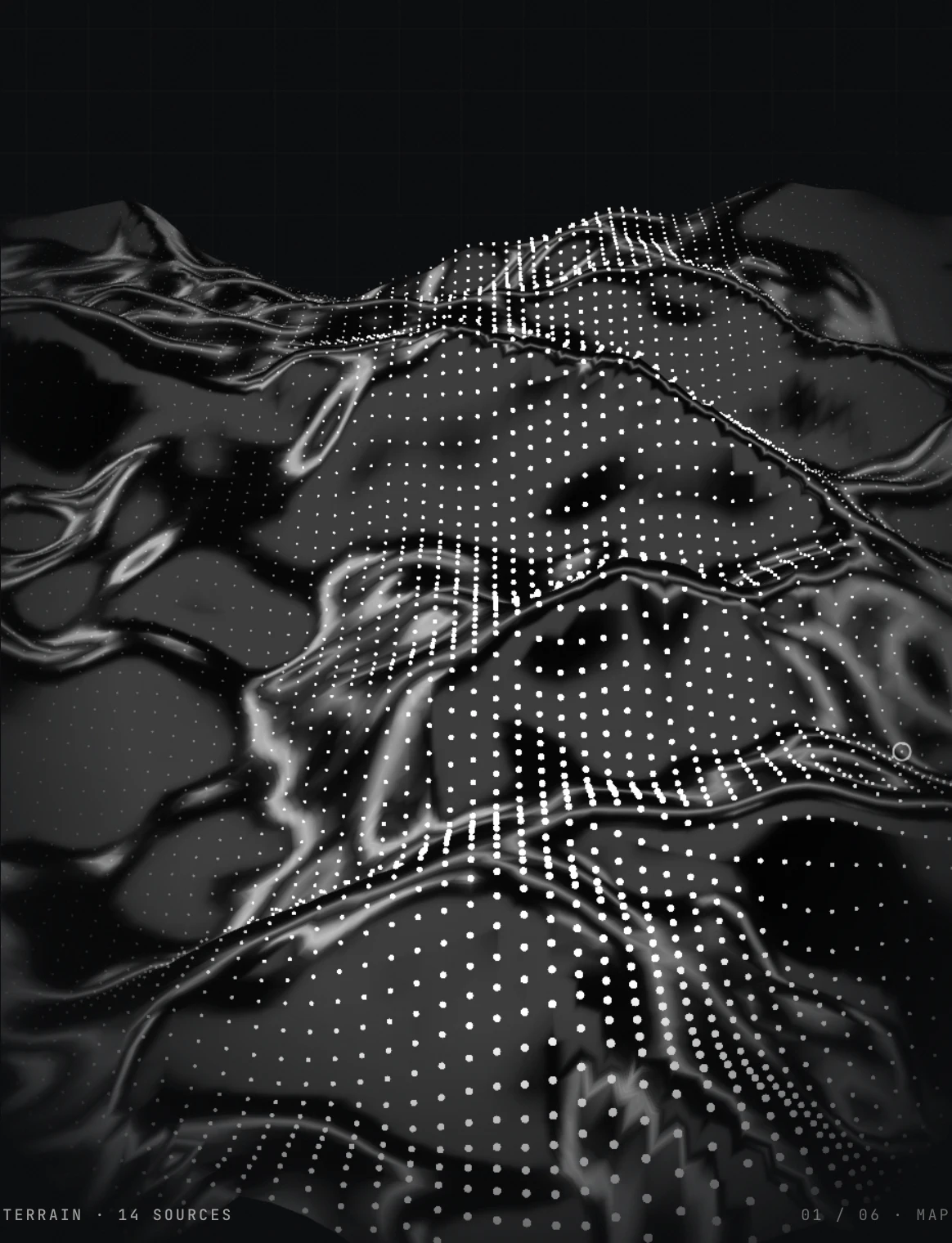
AI-led interviews debrief your GTM stakeholders while we read the APIs underneath: CRM fields, event streams, billing objects, support queues. The output charts where belief and data disagree, which is usually where the no-code glue is quietly failing. You review it like an architecture doc.

Output: a terrain map you can diff, in your repo

Step 02

Design one schema

Product events, CRM records, billing, and support collapse into one typed model in your warehouse, Snowflake or Postgres, with every join documented, every field mapped to its source, and no ETL mystery box in between. Your engineers can read the whole model in an afternoon.

Output: one revenue schema, typed and documented

Step 03

Rank what to build

The joined model gets swept for the actions worth automating first: product-qualified accounts with no owner, expansion signals going stale, renewals with open incidents against them. You get a ranked build queue with the evidence behind each item, and you can challenge any line of it.

Output: a ranked build queue, evidence attached

Step 04

Ship workflows as code

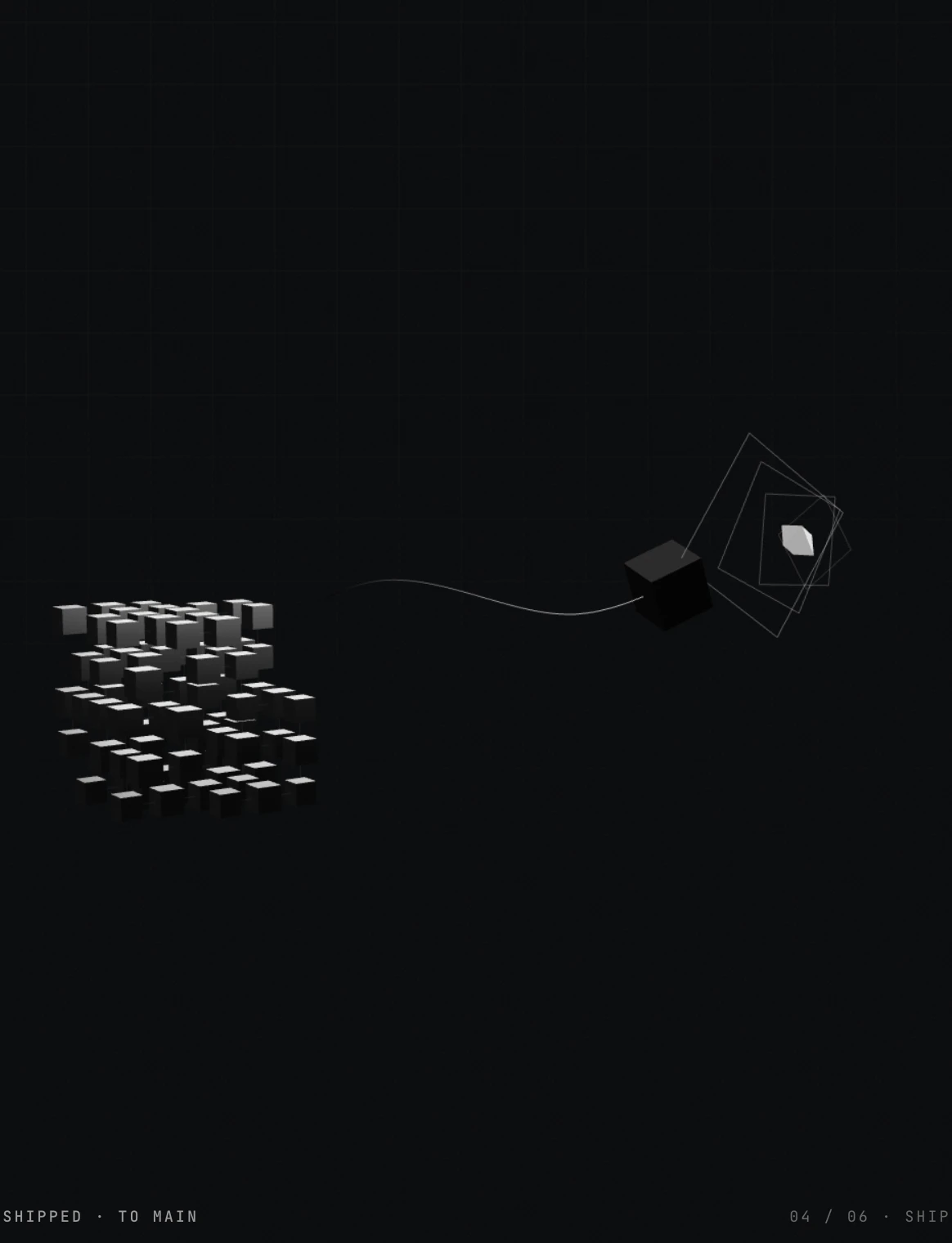
Routing, scoring, enrichment, alerts, and outbound sequencing ship as reviewed code on your infrastructure. Each patch runs against live records before it lands, logs what it touched, and fails loudly instead of silently, which no-code glue never learned to do.

Output: production workflows with logs and tests

Step 05

Watch the instrumentation

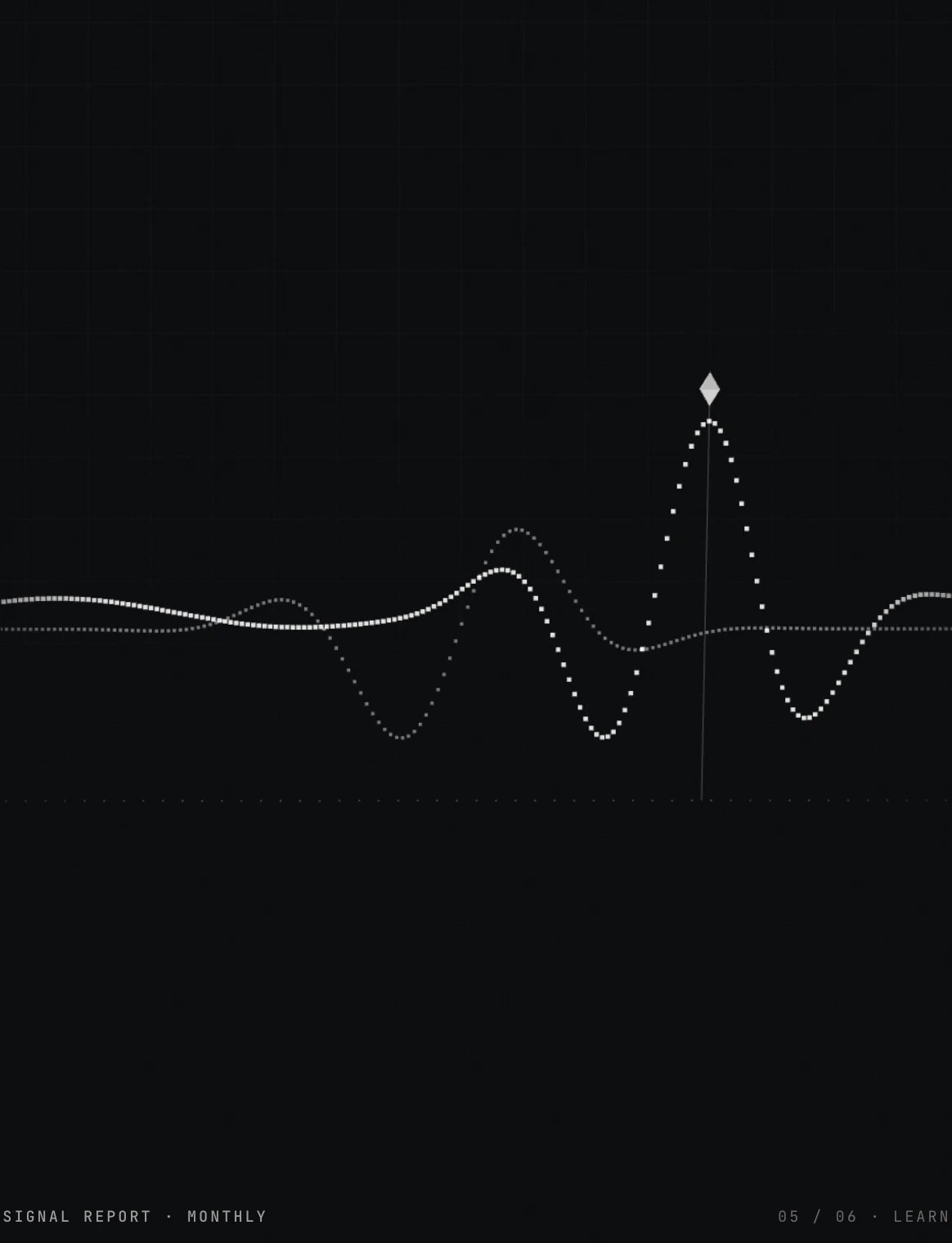
Every workflow reports what it surfaced, what the team acted on, and what revenue it touched. When a source drifts or routing misfires, you see it in the weekly report instead of in a quarter-end surprise. The system stays observable because it was built that way from the first commit.

Output: a weekly report you can interrogate

Step 06

Extend it or fork it

Learnings land back in the schema: thresholds move, definitions sharpen, new sources join the model. Everything lives in your repo, so your team can extend it, your agents can read it, and if we ever part ways you merge the last pull request and carry on.

Output: a compounding system with no exit cost

The commercial stack, held to your bar. Scope the build on one call.

Book a 20-minute call
Ask, then act

One revenue memory. Every surface.

GTM inputs
attio
stripe
metronome
clearbit
apollo
snowflake
segment
postgres
slack
hubspot
mixpanel
intercom
zendesk
linear
bigquery
salesforce
posthog
amplitude
+ and more
Month one

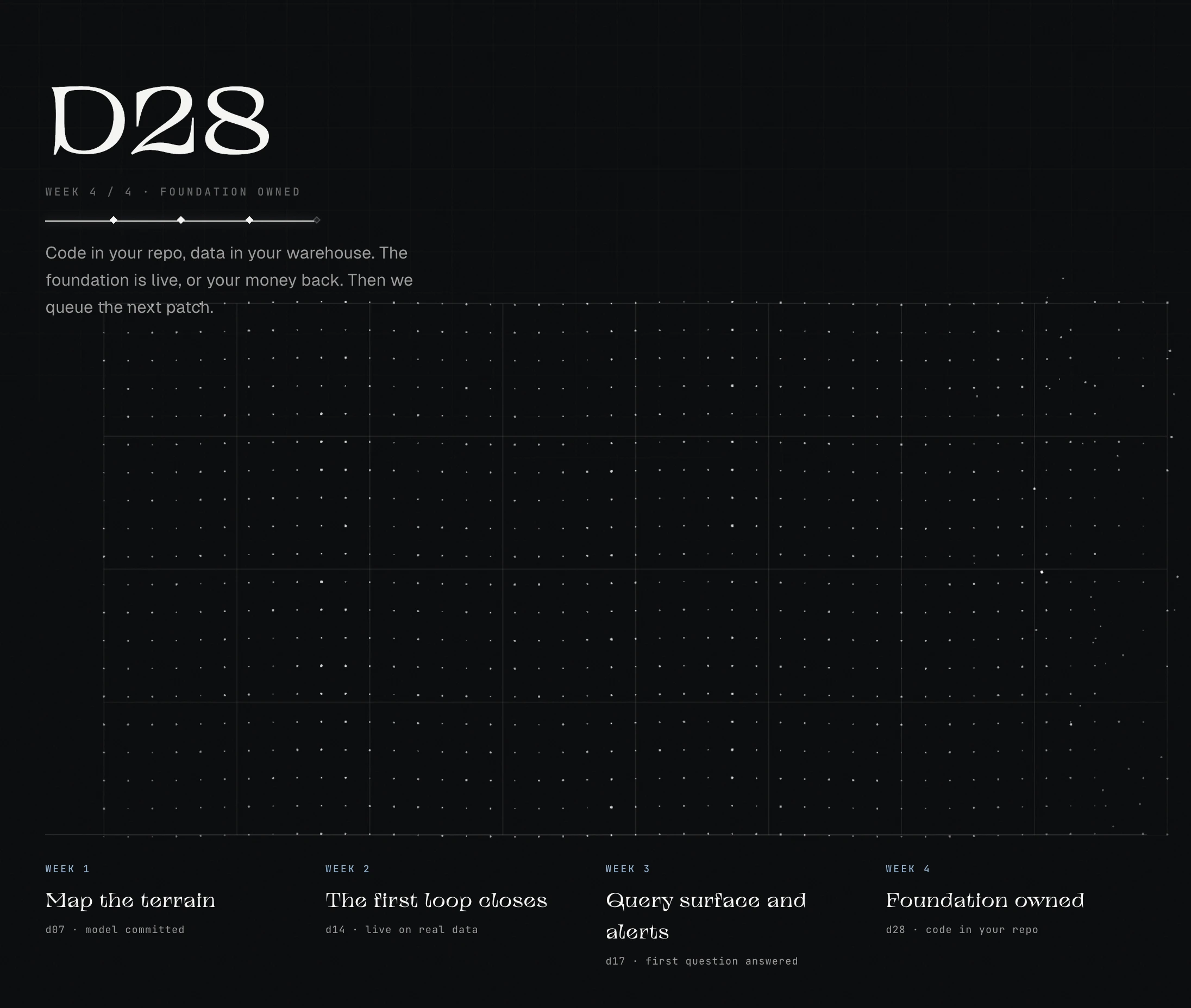
Month one ends in a merge. Into your repo, not ours.

We absorb the stack, then build the foundation under it: warehouse live, first workflow shipping, query surface answering. Every artifact lands where your code already lives, and the whole month is guaranteed.

Week 1

Audit the stack

Interviews and API reads run in parallel. The warehouse stands up and the schema drafts against your real sources.

Week 2

First workflow live

The first workflow runs against production records with logging and a rollback path, not a sandbox demo.

Week 3

Query surface up

The query surface and Slack alerts open up. Your team asks questions in plain language; your agents get scoped read access.

Week 4

Merged and owned

Docs, runbooks, and code merge to your repo. Foundation live or your money back, and the next patch is already queued.

You own the machine.

Ownership here is literal. The code sits in your repo, the data sits in your warehouse, the workflows run on your infrastructure, and the docs record why each decision was made. There is no platform between you and the system, and no per-seat license creeping up as the team grows. Cancel any month and the system keeps running. Teams stay because the memory keeps sharpening, not because leaving is expensive.

In production

Real systems, running today.

The ledger below is live: 30+ owned commercial systems in production, each versioned in a client repo and shipping verified patches weekly.

The next step

Bring us the stack you'd rather not glue together.

In 20 minutes you get an engineer's read on your commercial stack: where the data should join, which workflow earns its build first, and what it takes to run all of it as reviewed code in your repo.

prefer email? contact@workingmono.com