

Own your operations.
We believe AI should make businesses more capable and give the people running them more control over their work.
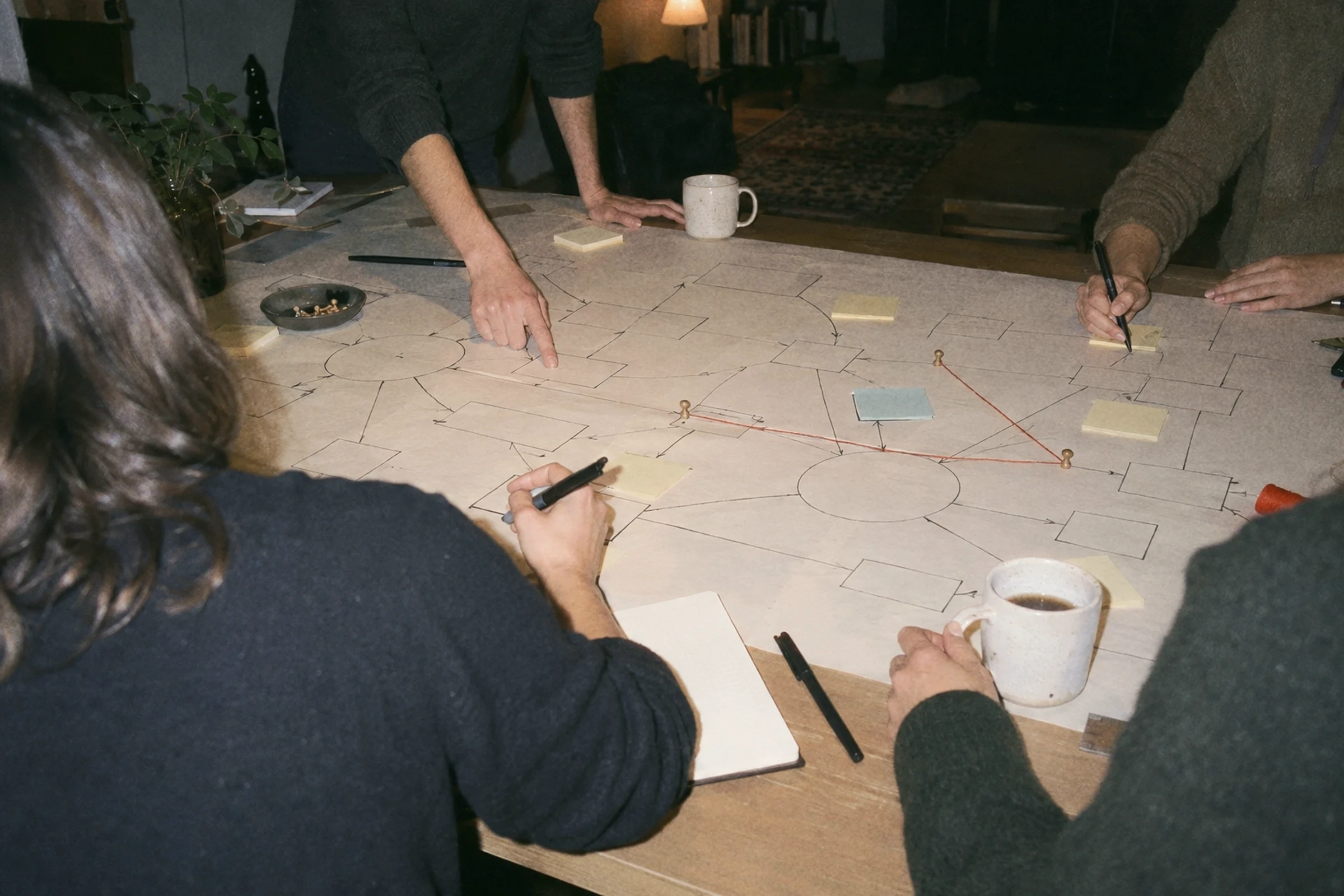
A business depends on knowledge that rarely lives in one place.
People remember what was promised to a customer, understand why an exception matters and recognise when the usual process no longer fits. Their experience keeps the operation working.
Too much of that knowledge has to be supplied again each day.
Someone finds the records, explains the situation and checks that the next step happened. As the business develops, those responsibilities accumulate.

We want the operation to carry more of that work.
An agreed decision should be available when it matters again.
AI should have the context and authority to complete useful work, with limits that reflect the consequences of getting it wrong. What the business learns should improve what it can do next.


The people using these systems must help shape them.
They need to understand how their work is changing and have a way to influence it. Responsibilities can evolve as AI becomes more capable. Accountability must remain clear.
Working Mono exists to build these AI-native operations.
We work with the people who understand the business and take responsibility for the systems we agree to build and run. We test what happens when information is incomplete, records disagree and things fail.


The ambition extends beyond making today’s processes faster.
A team should be able to enter a new market, serve customers differently or change how it operates without having to reconstruct everything it already knows.
That knowledge should outlast any particular tool or model.
The business should own its data and client-specific systems, understand its dependencies and retain the means to keep developing the operation. Our continued involvement should be a choice.

We will judge progress by what a business can now accomplish and what the work demands of its people.

Working Mono
Alex, Kyle, Josh and Ole. September 2026.


